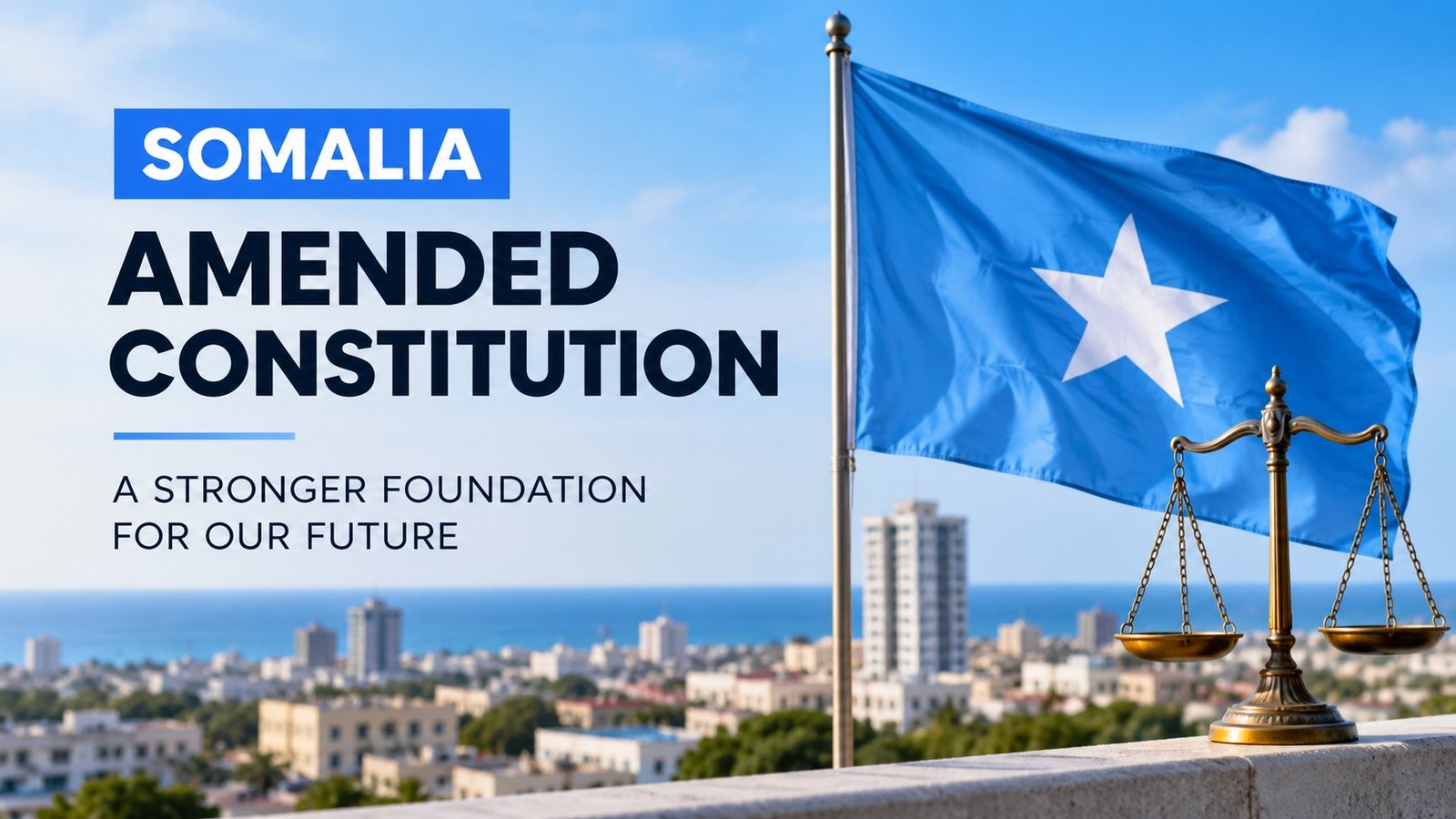
Somalia’s Amended Constitution: Understanding the 2026 Constitution
On 4 March 2026, the Federal Parliament of Somalia approved the country’s Constitution following more than a decade of constitutional review and amendment. The Constitution was subsequently signed by President Hassan Sheikh Mohamud on 8 March 2026. The adoption marked a major transition from Somalia’s 2012 Provisional Constitution toward a completed constitutional framework.
For more than thirteen years, Somalia operated under a constitutional framework that was expressly provisional and subject to review. The 2026 Constitution represents the outcome of that extended review process and establishes the constitutional framework now governing the Federal Republic of Somalia.
From the 2012 Provisional Constitution to the 2026 Constitution
Somalia adopted its Provisional Constitution in August 2012 as part of the country's post-transition political and institutional reconstruction. The Constitution established the federal system, fundamental rights, the structure of government, Parliament, the judiciary and other constitutional institutions.
However, the Constitution was not intended to be the final constitutional settlement. It was subject to a review and completion process.
That process continued for more than a decade, involving Parliament, constitutional review institutions, government bodies, Federal Member States, legal experts and other stakeholders.
On 4 March 2026, both Houses of the Federal Parliament jointly approved the Constitution. The parliamentary record reports that members voted on the constitutional provisions article by article, with the required quorum present.
Four days later, on 8 March 2026, President Hassan Sheikh Mohamud formally signed the Constitution into law.
The Office of the President describes the 2026 Constitution as the supreme law of the Federal Republic of Somalia and states that it supersedes the previous provisional constitutional frameworks.
What Does the 2026 Constitution Change?
The 2026 Constitution is not simply a re-publication of the 2012 document. The constitutional review process resulted in amendments and additional provisions across significant areas of the constitutional framework.
The Independent Constitutional Review and Implementation Commission reported that the final parliamentary process included a limited amendment to Chapter 4 and amendments to Chapters 5–15.
Its importance will ultimately be measured not only by the text adopted in 2026, but by the extent to which constitutional principles are translated into functioning institutions, legislation, judicial decisions and public administration.
The 2026 Constitution therefore represents both a constitutional milestone and the beginning of a new phase of constitutional implementation. Understanding that Constitution and making its provisions accessible to the public is essential to understanding Somalia's evolving legal order.
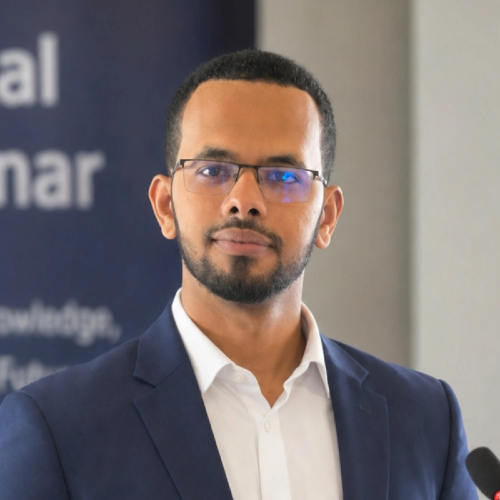
Masud Hussein is an Advocate with a multidisciplinary background in law, technology, and finance. He is a Governance, Risk, and Compliance (GRC) Specialist with expertise spanning legal practice, software engineering, and institutional governance. He is the initiator of Xeerduud.com / Constitution.so, an independent civic technology initiative dedicated to improving public access to Somalia’s Constitution through digital innovation and legal education. His professional interests include constitutional law, data protection and privacy, cybersecurity compliance, regulatory governance, and the application of technology to legal practice. He holds an MSc in Software Engineering and professional qualifications as an ISO/IEC 27001:2022 Lead Auditor and ISO/IEC 27701:2025 Lead Implementer. He also serves as Aquatics Treasurer at Somali World Aquatics. Through his professional work and writing, Masud explores the intersection of law, technology, finance, and governance, sharing insights that promote legal awareness, strengthen institutional capacity, and advance practical approaches to compliance and digital transformation.